
Grapevine Directory Holdings
Grapevine has a focused, not continuous, directory record. The city confirms one known Grapevine directory, dated 1972. That volume is held by the Grapevine Public Library, the Texas State Library and Archives Commission, and Dallas Public Library. For other years, Dallas telephone directories include Grapevine entries from 1955 through 1962 and from 1964 through 1996. The greater Fort Worth directories do not include Grapevine. A missing name or year therefore cannot settle whether a household was in town.
| Collection | Years | Where held | Access route |
|---|---|---|---|
| Grapevine directory | 1972 | Grapevine Public Library, TSLAC, Dallas Public Library | Confirm the edition with the repository |
| Dallas telephone directories with Grapevine entries | 1955–1962; 1964–1996 | Dallas Public Library | Repository collection access |
| Grapevine Telephone directory | 1900 | Grapevine local-history resources | Ask Genealogy Room staff about access |
| County directories and genealogy aids | Varies | Tarrant County Archives | Counter, phone, or email confirmation |
The Genealogy Room also reports 865 directory rolls among its broader microfilm collection. Those rolls are a finding aid, not proof of a complete Grapevine annual series. Start with the library desk, then record the title, place covered, edition date, and page viewed.
The same Grapevine room provides more than printed directories. Its local microforms include the Grapevine Sun from 1898 through April 30, 2009, with gaps, plus The Banner and The Herald runs. Federal census reels, Tarrant County tax rolls from 1850 to 1910, Texas birth and death indexes, and mortality schedules create dated companion paths for a name found in a directory. In-house database access includes Ancestry Library Edition, Fold3, HistoryGeo, and Newspapers.com Library Edition; several other genealogy and newspaper resources are available remotely with the right library-card access. Verify a database hit against the underlying item, issue, deed, census page, or certificate.
Grapevine Directory Room Access
The Frances Pittman Malcolm Genealogy Room is the practical first stop for a historical Grapevine name or address search. It has more than 13,000 books, more than 1,700 periodical volumes, over 12,000 microfilm rolls, and two digital microfilm readers with a scanning station. The room is open whenever the library is open. Listed hours are Monday through Thursday, 10:00–8:00, and Friday through Sunday, 10:00–6:00. The genealogy desk is at 1201 Municipal Way, 817-410-3429, genealogy@grapevinetexas.gov.
The Genealogy Room’s official collection page shows the local-history setting used for these shelves.
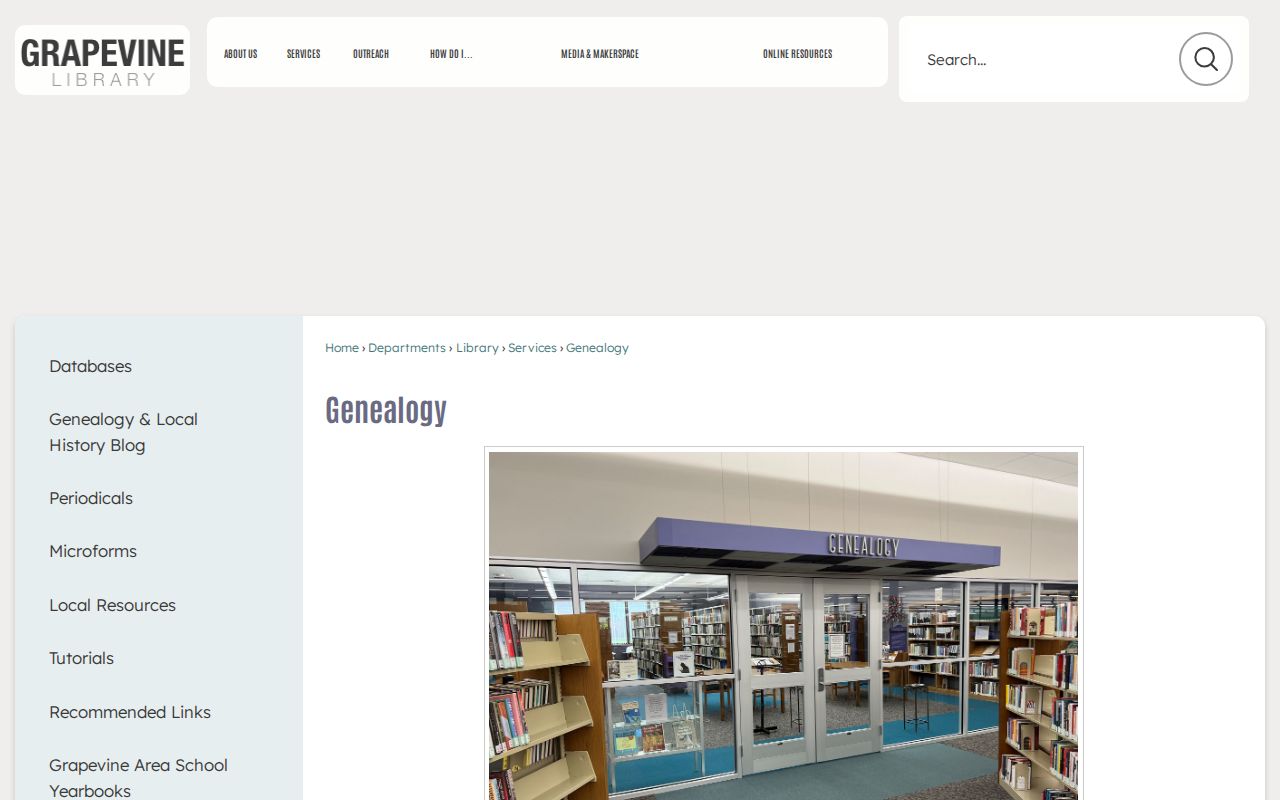
Staff can help confirm whether a reel or volume is available before a trip. Reasonable scans or emailed copies are free; ordinary prints or copies are 10¢, and mailed copies are $1 per page. The library’s in-house databases and reader equipment make this route especially useful when a historical volume is not openly searchable on the web.
The Grapevine Directory Gap
Directory myth: a continuous local directory does not exist for every town and every year. Grapevine’s confirmed local volume is 1972, while the Dallas telephone run has two date ranges with a gap. Greater Fort Worth volumes exclude Grapevine. Treating those sources as one uninterrupted series would create a false history.
Use the 1972 volume for that point in time, then compare the relevant Dallas telephone volume and independent records. Grapevine Sun microfilm reaches from 1898 through its final issue on April 30, 2009, though the run has gaps. The Banner and The Herald add shorter runs. A notice, land sale, civic meeting, or obituary can support a date range, but it should remain a dated newspaper lead rather than a claim of current residence.
Note: A blank directory year may reflect the collection, the edition, or an unlisted household rather than a move.
Grapevine Historical Directory Clues
The 1900 Grapevine Telephone directory is an unusually early local name source. City history associates it with J. F. Foust and describes subscriber listings with S/L ring notation. Preserve that notation exactly when it appears. It is a printed telephone clue from a small community, not a modern contact list and not a substitute for a census, deed, or certificate.
Ask the Genealogy Room whether the original directory or a reproduction can be consulted. The same room holds federal census reels, Tarrant County tax rolls, mortality schedules, birth and death indexes, and newspapers. Pairing a subscriber name with a tax roll, cemetery index, newspaper mention, or county land record can make a more reliable historical trail.
Reading a Grapevine Directory
Inspect the actual Grapevine volume before deciding what an entry means. Official research confirms the holdings and years, but it does not reproduce a legible sample entry or establish a fixed field layout. Do not assume that every printed entry supplies a spouse, telephone number, owner mark, or other detail. Copy the name spelling, address form, page, and edition first, then note only the fields visibly present.
| Name as printed | Preserve initials, spelling, and any suffix rather than normalizing the name. |
|---|---|
| Address as printed | Keep the house number and street form for comparison with maps and other dated records. |
| Edition evidence | Record the title, year, repository, page, and any publisher information visible in the volume. |
| Other printed details | Transcribe a household, telephone, or notation only if it appears in that specific entry. |
- Criss-cross directory
- A directory arranged by street and address instead of by name. Confirm that a particular volume includes one before relying on it.
- Householder index
- A name-oriented list that may identify a household, but its presence and rules vary by edition.
- Abbreviation key
- The volume’s own explanation of shortened labels. Photograph or transcribe it when the edition contains one.
Grapevine Directory Years Compared
Dates establish the boundaries of each Grapevine historical lead. They also show why a researcher needs more than one collection. The older telephone item, local 1972 volume, and Dallas volumes are separate sources with different coverage and formats.
- 1900: the Grapevine Telephone directory records subscribers and S/L ring notation.
- 1955–1962: Dallas telephone directories include Grapevine entries.
- 1964–1996: the Dallas telephone-directory run resumes after the documented break.
- 1972: the city’s one confirmed local edition is available through the named repositories.
For a historical household, check nearby federal census years, newspaper dates, tax rolls, and recorded deeds. The 1890 federal census is largely lost, so county and library sources can be especially useful for that period. The 1876 Tarrant courthouse fire also created a genuine early-record gap, not evidence that a family was absent.
Grapevine Archive Companions
Portal to Texas History’s Grapevine partner collection gives the directory search a digital companion. Its partner snapshot lists 114 items across six collections and 10 resource types, including oral histories, letters, books, clippings, legal documents, newspapers, sound, and video. Those totals describe the available digital collection, not a count of Grapevine residents.
The Portal to Texas History collection page provides the online source used for this local-history companion.
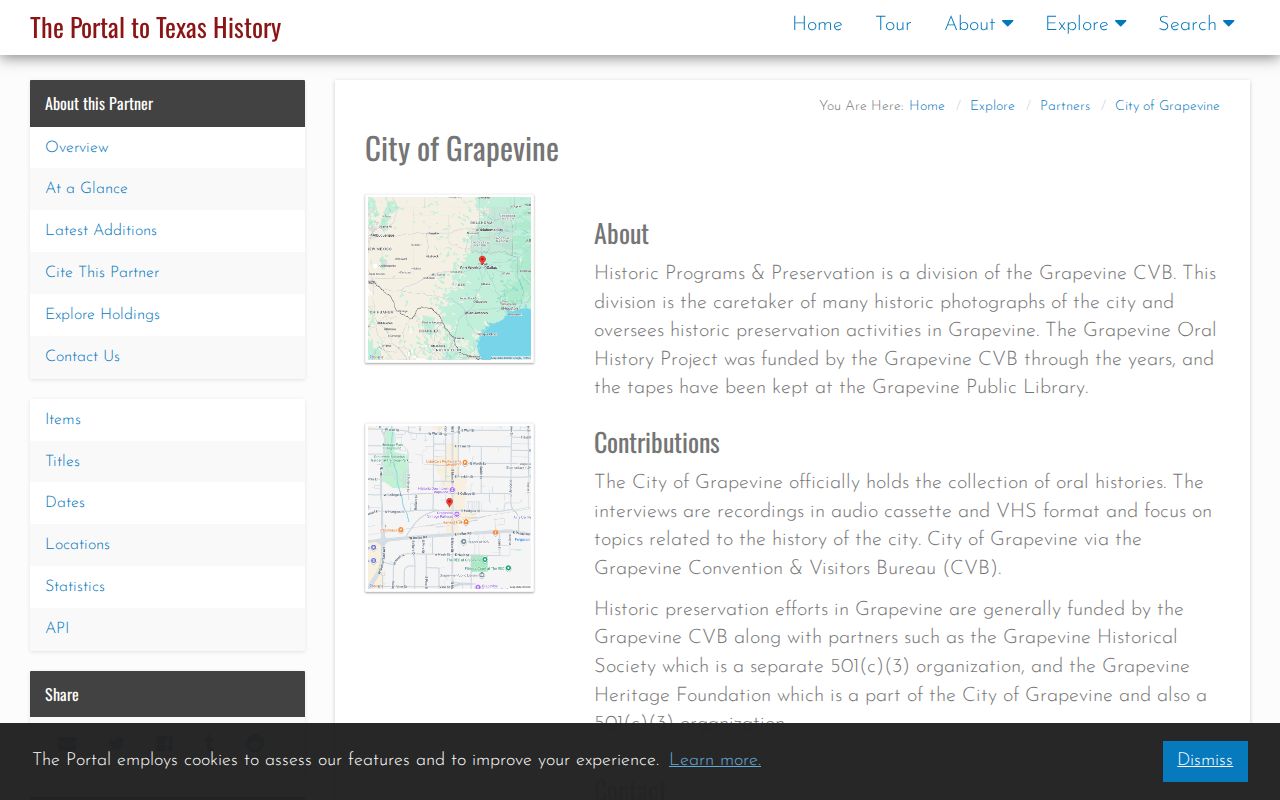
Search an item by name, interview subject, date, organization, or place, then cite the item record. The Grapevine Historical Society offers museum context, oral-history referrals, local building history, and family-name leads. Its Historical Museum is at 206 W Hudgins Street and is open Friday through Sunday, 10:00–4:00.
Grapevine Directory History Sources
The Grapevine Historical Society preserves local context rather than a guaranteed searchable resident roll. Alberta Nettleton helped preserve Grapevine Sun microfilm back to 1898 and donated it to the library. The Society’s 1981 oral-history project produced 45 tapes held at the library. Four local cemetery census/indexes are also in the Genealogy Room.
The Historical Society’s official site is the source for this Grapevine history connection.

These materials can bridge a missing directory year. A cemetery entry or oral-history mention still needs comparison with a dated record because burial, memory, and residence are different facts.
Tracing Grapevine Directory Families
A family-history trail begins with the source closest to the target date. For 1972, inspect the confirmed Grapevine local volume. For the surrounding decades, compare the Dallas telephone volumes where coverage exists. Keep every spelling and address variant. A historical address may use an older street name, since Morehead Street became Texas Street after the 1924 annexation period.
- Find the person or address in the closest documented directory or telephone volume.
- Write down the edition, page, name form, and address exactly as printed.
- Check a nearby census year, tax roll, newspaper issue, or recorded deed for an independent dated record.
- Use the Genealogy Room’s cemetery index, microfilm, or databases when the printed trail stops.
- For a modern administrative question, confirm it with the responsible custodian rather than a historical entry.
For people found in historical volumes who need a current official record checked, the Grapevine resident lookup follows a separate, name-focused verification route. Historical directory entries should remain historical evidence, with their own date and source.
Grapevine Archive Fallbacks
When the library does not hold the needed item, contact Tarrant County Archives. Its genealogy holdings include Footprints surname and topical indexes for 1957–1997, marriage volumes from 1876–1901, early probate abstracts, maps, city directories, cemetery records, and more than 600 collections overall. The Archives advises that it does not hold every county record, so call first at 817-884-3272 or email archives@tarrantcountytx.gov.
The County historic ledgers collection is a documented fallback when a Grapevine historical lead turns into a county record question.
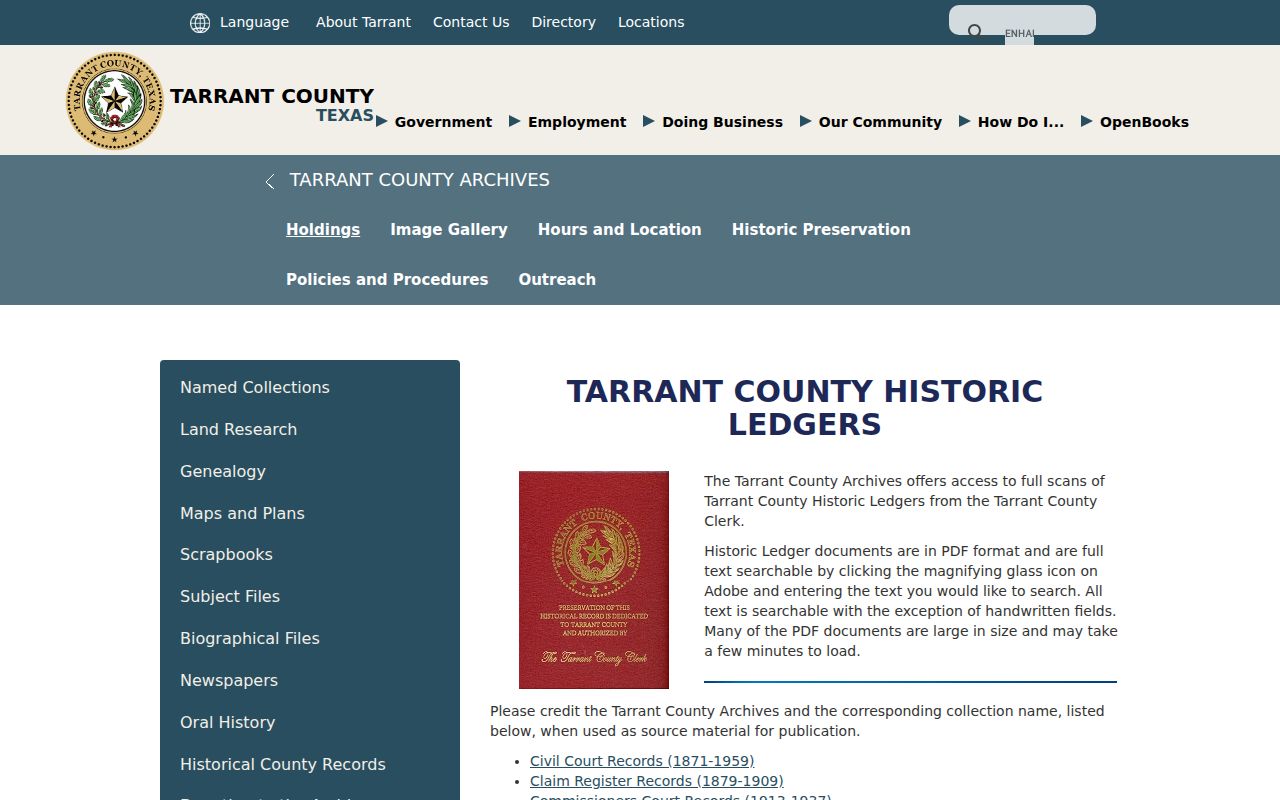
Walk-in hours are Tuesday through Friday, 9:00–4:30, with Monday visits by appointment. Historic ledger scans cover many county series, but handwritten names may require visual inspection. The Texas State Library and Archives tax-roll resources are another state-level route, with staff at ref@tsl.texas.gov or 512-463-5455. FamilySearch’s Texas tax-roll collection may require a free account and is not indexed uniformly. Use an archive result to identify the next record, not to fill an unsupported gap.